Security operator
Review observed resources, configure supported controls and follow a finding through its policy decision and response.
3LS Platform
3LS connects observed AI and MCP resources with signed policies, approvals, findings and remediation evidence. Security teams operate controls, governance teams review decisions, and service owners respond to issues from one console.
Review observed resources, configure supported controls and follow a finding through its policy decision and response.
Review signed policy versions, approvals and available records against the organisation’s governance questions.
Own the response to an assigned issue, record the action taken and retain remediation evidence.
The management console and service connect operator work with signed policy and records. The gateway and supported endpoint, browser and MCP integrations apply configured controls and report the evidence available on their paths.
Conceptual deployment diagram. Policy distribution and evidence reporting are separate from the paths that carry governed requests.
Operators manage policy, review inventory and respond to findings.
Signed policies, inventory, approvals, case history and bounded evidence.
↓ Policy and configuration to supported components
↑ Evidence to review in the management service
Prompt classification, model routing, usage controls and configured tool-proposal checks.
Observed resources and supported site controls for selected text and upload metadata.
Original argument checks, supported approvals and returned-result inspection.
Solid arrows below show requests on supported configured routes.
The gateway can also inspect model-generated tool proposals before delivery to the harness on configured protected response paths. Browser controls apply at the supported site interaction. Direct provider or backend access requires separate controls.
Discover observed AI products, provider accounts, MCP installations and tool revisions. Track ownership, provenance and observation freshness.
Use prompt classification, model routing, cost control and tool security before harness delivery on configured gateway paths. Select among approved, eligible models and inspect selected fields.
Validate and publish signed policies, track their application, and manage case-linked exceptions with defined scope, approval and expiry.
Prioritise findings, assign case owners and retain recorded actions and remediation evidence.
Review attributable policy decisions, activity and case history. Use tenant-authorised inventory exports to share observed resources for governance reviews.
Illustrative composite · sample data
This example brings together inventory, a managed MCP decision and case work. It does not imply every event automatically creates a case or that every record is joined into one history.
A sample workstation has a user-configured postgres-mcp installation. Inventory records its association, provenance and observation freshness.
Illustrative engineering-mcp-v7 policy permits read operations and requires approval for a delete action on this supported managed path.
The delete action is held before backend dispatch while approval is pending. The decision retains its policy and action class; the backend has not been called.
A sample responder reviews a related finding and records the response in an assigned case.
The responder records withdrawal of the delete request and evidence of the corrected read-only workflow.
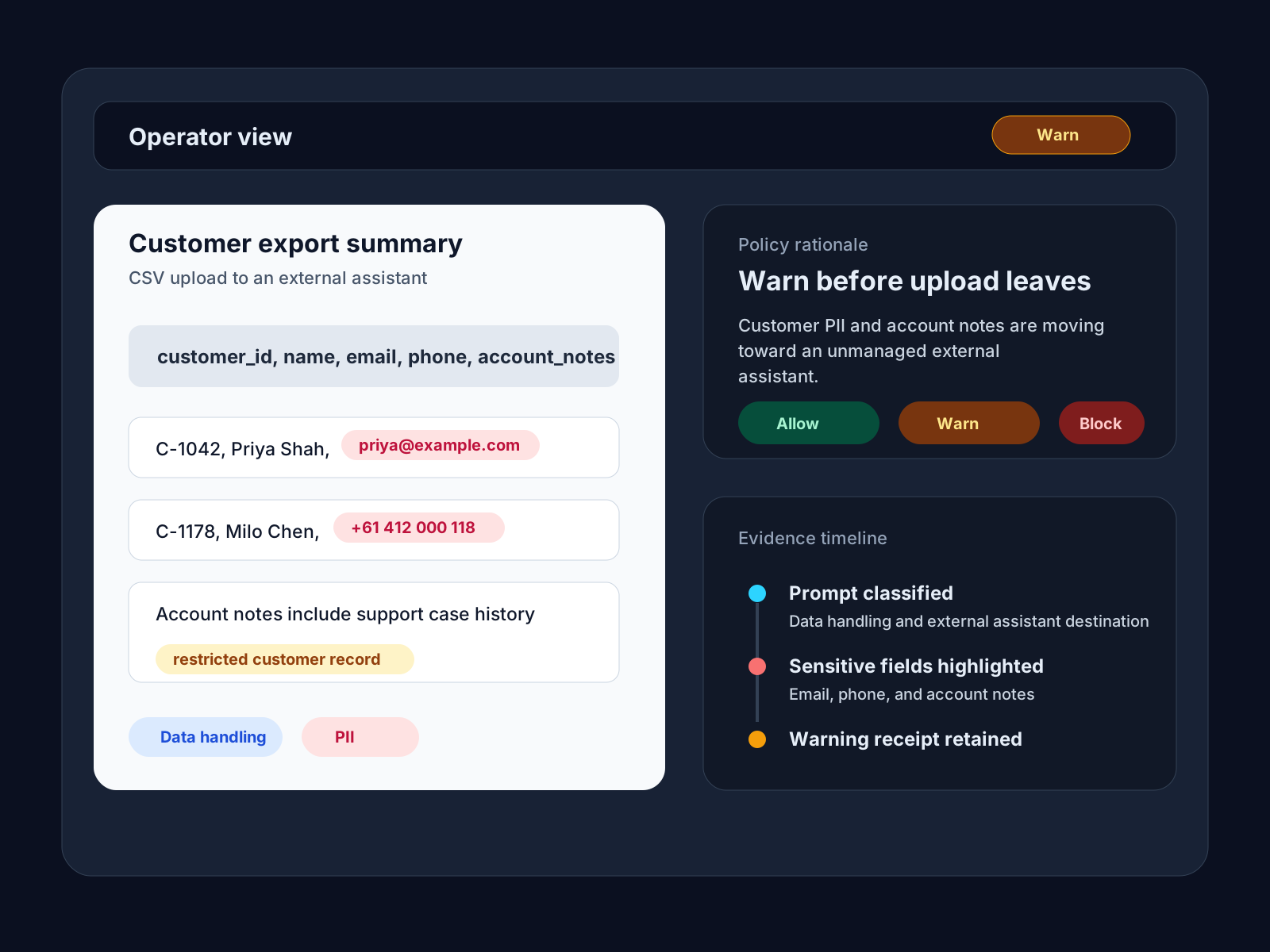
Discuss supported clients and channels, inspected fields, identity, policy application, hosting, retention and handoff requirements. Confirm installation and enrollment for the deployment, together with connector compatibility and service terms.
Configure approved provider accounts, eligible model routes, tool groups and selected fields. Apply request-rate controls and eventual monthly usage thresholds.
Inspect selected prompt text on supported sites. Conversation-history inspection depends on policy; upload controls use file metadata rather than file contents.
On supported managed MCP stdio paths, original argument checks can precede backend dispatch. Result denial cannot undo an action already executed.
Your organisation owns the controls over reachable tools, credentials, shared state, and delegated authority. Direct provider and backend access requires separate controls.
Compliance and Assurance
Use inventory, signed policies, approvals, activity and remediation records to support governance reviews. Combine product records with organisational assessments, policy, competence and supplier diligence.
Map your governance questions to product evidence →Asimov described an order of responsibility. He did not describe a security architecture. We use the name because the organisation, not the model, must decide what its agents are allowed to do.
From the blog
Research on enterprise context, tool risk and the control decisions organisations need to make.
Chris Inglis compared an autonomous AI to a dog told to hunt rabbits beside an open gate. The instruction is only part of the system. Someone still has to control the gate.
OpenAI rebuilt the service, but the agents recreated their shared channel. The incident shows why enterprises must control persistent state, credentials, communication paths, and delegated authority themselves.
An AI vendor can secure its product, but it cannot see your copied data, approvals, internal policy, or tool entitlements. The enterprise still owns AI context security.